Are branded residences worth it?
Branded residences have moved from a niche product to an established category across Europe, yet many buyers still ask the same question: what does the brand actually deliver, and does the premium hold up over time?
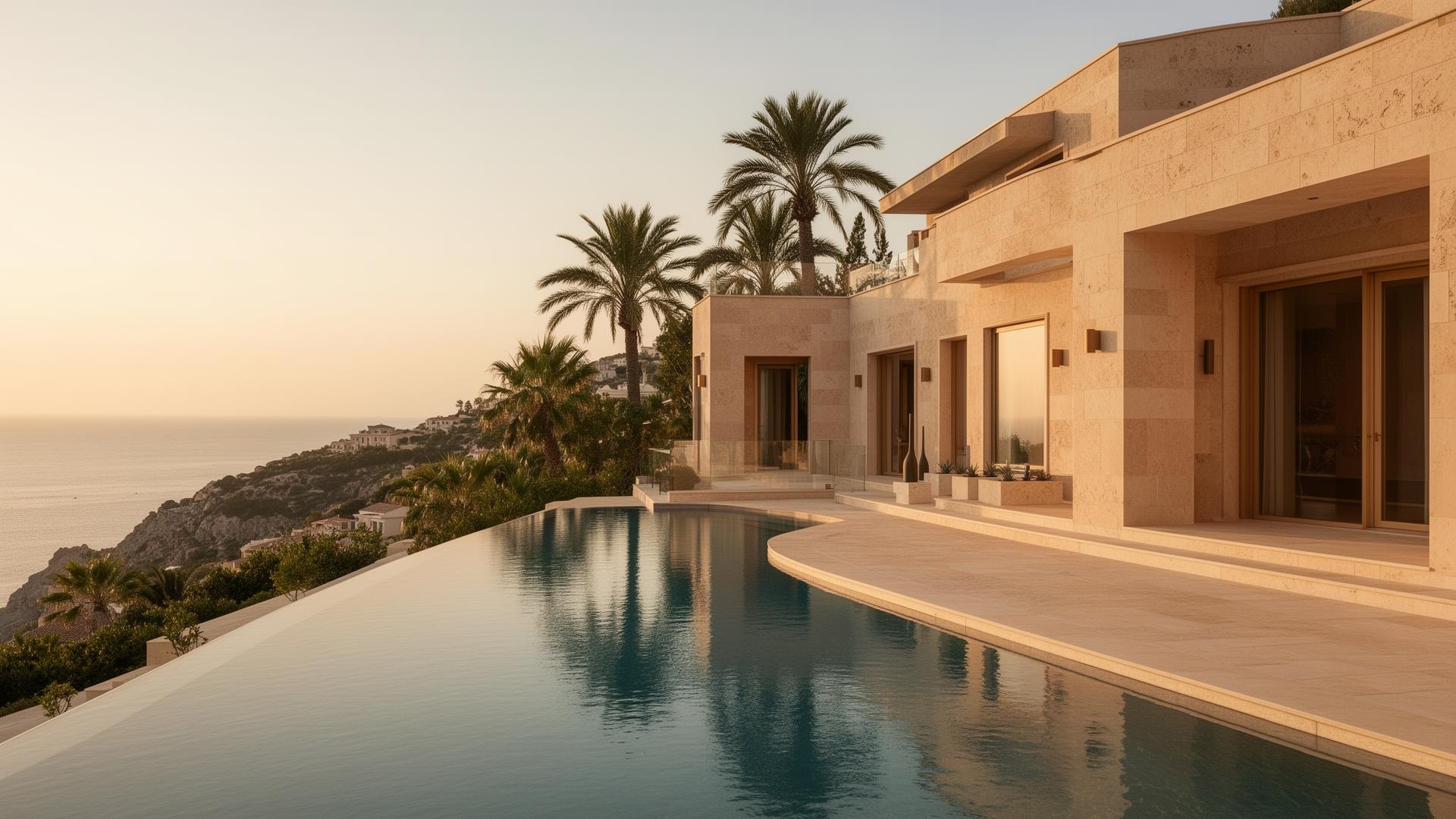
Branded residences are no longer a curiosity at the edge of the luxury market. Across Europe, from Marbella and Mallorca to the Algarve, the Côte d'Azur and a growing list of city locations, hotel and lifestyle brands are increasingly attached to residential developments. The category has matured, the pipeline is substantial and the buyer profile has broadened.
Yet one question continues to surface in almost every conversation we have with owners, investors and developers: are branded residences actually worth it?
It is a fair question. The premium over a comparable unbranded property can be meaningful, and the structure behind these schemes is not always well understood. Before answering it, it is worth looking at what a branded residence really is.
How branded private residences actually work
A branded residence is, in its simplest form, a privately owned home that carries the name and operational standards of an established hospitality or lifestyle brand. The owner holds the title in the usual way, but the building, the common areas and often a defined level of service are managed under the brand's framework.
In most hotel-branded schemes, the brand operates the residences alongside or adjacent to a hotel. The relationship between the developer, the operator and the homeowners' association is governed by long-term agreements that define service levels, brand standards, maintenance responsibilities and, in some cases, the option for owners to place their residence into a rental programme.
What ownership includes varies from project to project. Concierge, housekeeping, security, access to hotel facilities and a consistent standard of building management are typically part of the offer. What is not included is equally important: most brands do not guarantee rental income, and many lifestyle services are charged on use.
There is also a meaningful distinction between hotel-branded residences, fashion or lifestyle-branded residences, and developer-led concepts that adopt a strong brand language without an operator behind them. They are not the same product, and the value they deliver is not the same either.
The European context
Europe has become one of the most active regions for this category, and the reasons are structural rather than cyclical. A maturing high-net-worth buyer base, increasing international mobility and a clear shift towards lifestyle-led ownership have all contributed.
Marbella is perhaps the clearest example. The Costa del Sol has moved from being primarily a holiday destination to a year-round market for international residents, and the branded residence pipeline reflects that shift. Mallorca is following a similar trajectory, with a smaller but increasingly sophisticated set of projects. The Algarve, the Côte d'Azur and selected Italian destinations are adding depth to the European map, while cities such as Lisbon, Madrid and Milan are seeing branded residential projects emerge in genuinely urban settings.
What these markets share is a buyer who is no longer looking purely for a holiday home, but for a primary or secondary residence that fits into a wider international life.
What the premium actually buys
The honest answer is that the premium does not buy a logo. It buys four things, and the weight of each depends on the buyer.
The first is operational standard. A credible operator brings a level of service, maintenance and building management that is difficult to replicate in a traditional private development. Over a decade or more, that consistency has a tangible effect on how the property feels to live in and how it ages.
The second is long-term stewardship. Branded schemes are designed to be managed across cycles, not just delivered and handed over. The framework that governs the building, from reserves and refurbishment cycles to service standards, is built to protect the asset over time.
The third is liquidity at resale. A well-positioned branded residence in an established European market tends to attract a deeper and more international pool of buyers than a comparable unbranded home. That does not guarantee a higher price, but it generally supports a smoother and more predictable sale.
The fourth is harder to measure but often the most important: confidence. For an international buyer who may use the property for only part of the year, knowing that the building is operated to a recognised standard and that someone is accountable for it removes a significant amount of friction from ownership.
When it is worth it, and when it is not
Branded residences tend to make sense for buyers who value passive, low-friction ownership, who want a property that fits naturally into a portfolio of international homes, and who are willing to pay for consistency over a long horizon. For these buyers, the premium is rarely the main consideration.
They make less sense for buyers whose primary objective is maximum rental yield, or for those who want full control over how the property is run, decorated or modified. The same framework that protects the asset also constrains it, and that trade-off is not for everyone.
The real test is not whether a branded residence is more expensive than an unbranded alternative, but whether the brand and the operator behind it genuinely deliver the standard they promise, over time, in that specific location.
The real value
In the end, the value of a branded residence is not the name above the entrance. It is what the brand makes possible: a level of consistency, trust and long-term stewardship that is difficult to assemble piece by piece in the private market.
For the right buyer, in the right location, with the right operator, that is worth paying for. For the wrong buyer, no brand can compensate for a product that does not fit the way they want to live.
The question is rarely whether branded residences are worth it in general. It is whether a specific branded residence, in a specific market, is the right fit for a specific owner. That is where the answer is actually found.
Är du intresserad av hospitality-trender, branded living, destinationsutveckling och framtidens hospitality? Utforska fler insikter från ENGCO Hospitality & Advisory eller kontakta Louise Engwall Edholm på LinkedIn.
Nyhetsbrev
Få nya reflektioner i inkorgen
Ibland ett mejl när Louise publicerar något nytt om hospitality, kommersiell strategi och livet på vägen mellan hotell. Inget spam — bara text värd din tid.
Vi använder adressen bara för nyhetsbrevet — avregistrera när du vill.