When Does a Hotel Become a Destination?
The most interesting hotels today are not simply places to stay. Increasingly, they are becoming the reason to travel.
For a long time, the relationship between hotels and destinations was fairly straightforward.
Travellers chose a destination first. Then they searched for somewhere to stay.
Paris. London. Marbella. Tuscany. The Alps.
The destination created the demand and the hotel competed for its share of it.
But increasingly, I believe we are seeing that relationship work the other way around.
Some hotels are becoming strong enough to create demand for the destination itself.
And that raises an interesting question for hotel owners, operators and developers:
When does a hotel stop being somewhere to stay and become a destination in its own right?
The Hotel as the Reason to Travel
A destination hotel doesn't necessarily have to be a remote resort, a grand historic property or sit on a Mediterranean beach.
What matters is whether the hotel gives people a sufficiently compelling reason to make the journey.
It might be an exceptional spa. A restaurant people are willing to travel for. Architecture. A rooftop pool. A particular setting. Programming, culture or experiences.
Sometimes it is simply an atmosphere that guests want to be part of.
The strongest properties bring several of these elements together.
When accommodation, food, wellness, design, social spaces and experiences form one coherent proposition, the guest's thinking begins to change.
Instead of asking: “Where should we stay when we go there?” the question becomes: “Should we go there because we want to stay at that hotel?”
That is a very different commercial position.
From Selling Rooms to Creating Demand
This also changes what the hotel is actually selling.
A traditional hotel proposition is largely built around accommodation: rooms, location, service and perhaps breakfast or meeting facilities.
A destination hotel is selling something broader.
It is selling a reason to travel.
That distinction matters commercially.
If the hotel itself can generate demand, it becomes less dependent on whatever demand already exists in the surrounding destination.
It can potentially attract new guest segments, create weekend and leisure demand, increase spend beyond the room and give guests more reasons to stay longer.
Restaurants, bars, wellness, events and experiences stop being supporting amenities and become part of the hotel's demand-generation strategy.
That requires a different way of thinking about the asset as a whole.
More Amenities Don't Automatically Create a Destination
There is an important distinction here.
Adding a spa, restaurant, rooftop bar and beautiful rooms does not automatically create a destination hotel.
A collection of great facilities can still feel like a collection of separate products.
The real opportunity comes when they reinforce one another and create one clear experience and one clear reason to choose the property.
And that starts with positioning.
Who are we creating this place for?
Why would someone travel here rather than somewhere else?
What should guests tell their friends about afterwards?
And perhaps most importantly: what can guests experience here that they cannot easily replicate somewhere else?
These are classic hospitality questions.
But they become even more important when the ambition is to create a destination rather than simply another good hotel.
When Hotels Change the Perception of a Place
There is another aspect of destination hotels that I find particularly interesting.
A strong hospitality concept can change the perception of the location around it.
We have seen this internationally when hotels, restaurants and hospitality-led developments have helped put previously overlooked neighbourhoods, towns and regions onto the travel map.
The property becomes an anchor.
Visitors arrive who might otherwise never have considered the location. Other restaurants, experiences and businesses can develop around that new demand.
Eventually, the relationship between hotel and destination begins to shift.
This is why I believe hospitality can play a much bigger role in placemaking and real estate development than simply providing somewhere for people to sleep.
A Recent Example Made Me Think About This
A recent visit to The Dock Hotel in Södertälje, Sweden, made me reflect on this shift.
Södertälje is not traditionally the first destination that comes to mind for a leisure hotel weekend from Stockholm.
Yet the proposition being created at The Dock is deliberately broader than accommodation.
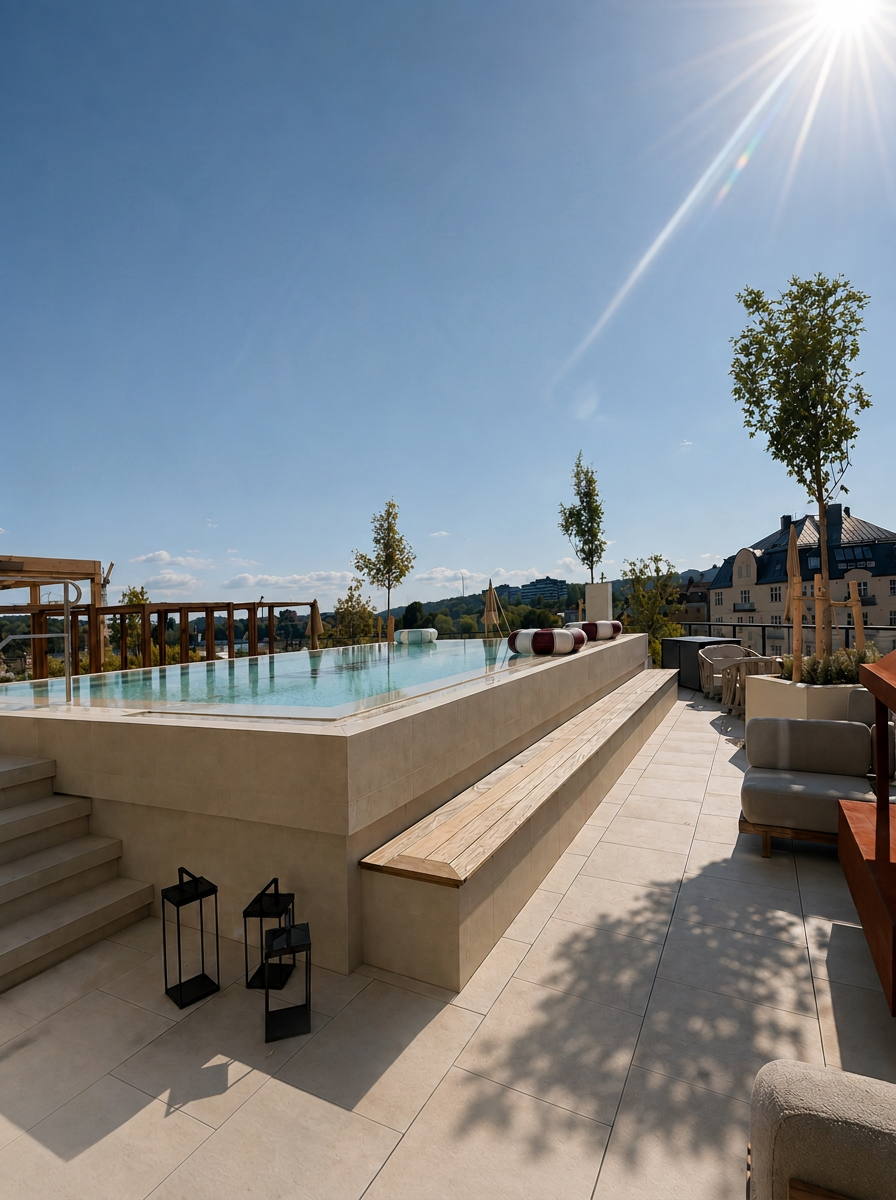
With its waterfront setting, restaurants and social spaces, skybar and the newly opened Paloma Spa & Pool Club with its rooftop pool, the ambition is clearly to create an experience where more of the reason for the trip exists within the hotel itself.
That is commercially interesting.
Because when the hospitality proposition becomes strong enough, the traditional hierarchy can begin to reverse.
The guest doesn't necessarily choose Södertälje and then discover The Dock.
The Dock can become the reason to choose Södertälje.
And that, to me, captures the essence of a destination hotel.
The Opportunity for Hotel Owners and Developers
For owners, developers and operators, the opportunity is therefore bigger than adding amenities.
It is about understanding which elements can genuinely create demand and then building a commercial ecosystem around them.
Five questions are worth asking:
1. Would someone travel specifically to experience our hotel?
2. Do our different outlets and experiences strengthen one another?
3. Is there a clear guest and occasion we are designing for?
4. Does our positioning communicate a reason to travel, rather than simply a place to stay?
5. Can the hotel create demand during periods when the surrounding destination cannot?
If the answers are strong, the hotel potentially occupies a much more valuable position.
Because the most compelling hospitality assets don't simply capture existing demand.
They create demand of their own.
Perhaps that is where some of the most interesting opportunities in hospitality development lie today: from being part of the destination to becoming a destination in your own right.
Disclosure: I am a shareholder and board member of Winn Hotel Group, operator of The Dock Hotel.
Nyhetsbrev
Få nya reflektioner i inkorgen
Ibland ett mejl när Louise publicerar något nytt om hospitality, kommersiell strategi och livet på vägen mellan hotell. Inget spam — bara text värd din tid.
Vi använder adressen bara för nyhetsbrevet — avregistrera när du vill.